
Key Takeaways
- IPTV is growing because viewers want control over what they watch, when, and on which device.
- AI, 5G, and adaptive streaming are the main technical drivers behind better quality.
- Live sports and events keep IPTV relevant for people who still want a “live TV” feel.
- Regulation is tightening, so licensed and transparent services will matter more every year.
- Viewers who prepare now, with the right connection, device, and provider, will get the smoothest experience.
Quick answer: The future of IPTV is personalized, cloud-based, and available on every screen. AI recommendations, 5G, smarter video compression, and stricter regulation will shape how people watch TV over the next few years. Live sports and on-demand libraries will sit side by side in one app.
Why People Search for the Future of IPTV
Most people who search for the future of IPTV want clear answers to a few questions. Will IPTV replace cable and satellite? What new technology is coming? Is it safe and legal? What should I do now to get ready? This guide answers each one in plain language, so you can decide with confidence.
What Is IPTV?
IPTV, or Internet Protocol Television, delivers live channels and on-demand content over an internet connection instead of an antenna, cable or satellite dish. If you want the full basics first, read this guide on what IPTV is. It explains how streams reach your screen and what equipment you need.
Why IPTV Is Growing
Viewing habits are moving online. In its Media Nations 2026 report, Ofcom found that overall viewing of broadcaster TV fell 8% year on year to 2 hours 19 minutes per person per day. Ofcom also reported that YouTube viewing on TV sets has doubled since 2022, which shows how quickly the living room screen has become an internet screen.
The gap between younger and older audiences is also widening. Younger viewers watch less scheduled TV, and older viewers remain the core of live television. IPTV sits between both groups because it can offer live channels and on-demand choice in the same place.
7 Trends Shaping the Future of IPTV
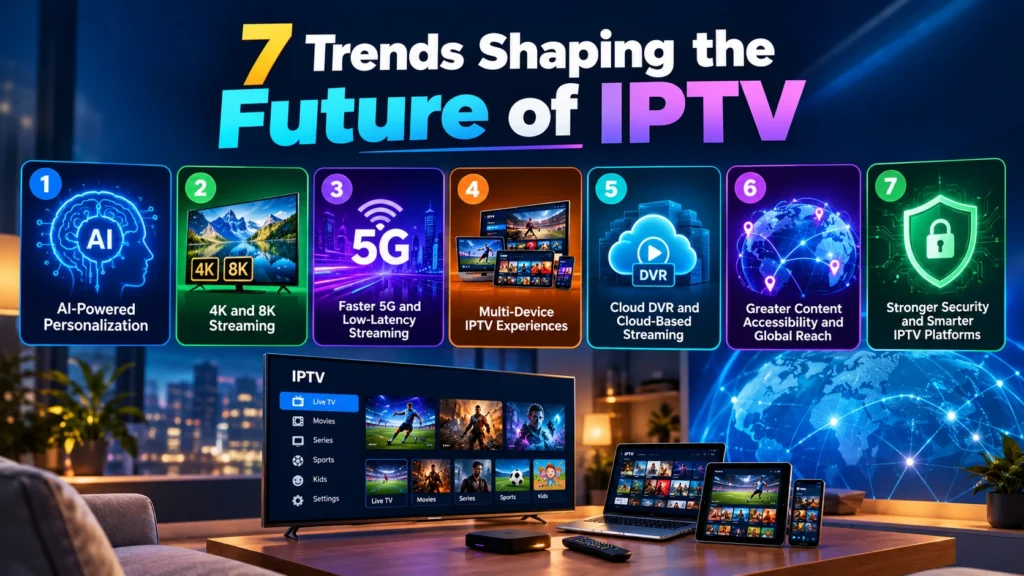
1. AI-Powered Personalization
Recommendation engines are learning what each household enjoys and adjusting home screens to match. Research on the future of IPTV notes that AI and machine learning improve content recommendations, predictive analytics, and network management. Expect better voice search, smarter “continue watching” rows and less time scrolling through menus.
2. 5G and Faster Broadband
Faster networks mean less buffering and more reliable mobile viewing. The same research highlights 5G and cloud-based delivery as major drivers for IPTV’s next stage. In practice, this means stable HD and 4K streams on phones and tablets, not only on a home Wi-Fi connection.
3. Adaptive and More Efficient Streaming
Modern players switch quality up or down automatically to match your connection. This technique, explained in this guide to adaptive bitrate streaming, keeps playback smooth when your speed changes. Newer video codecs will also deliver sharper pictures using less data, which helps households with limited bandwidth.
4. Live Sports and Events Stay at the Center
Live content is where traditional TV still holds its strongest audiences. Ofcom noted that live events such as sport continue to generate large audiences for broadcasters. This is why IPTV sports coverage is one of the first things viewers check when choosing a service. Expect lower delay on live streams and better multi-game viewing.
5. Live TV and On-Demand Merge
The line between live channels and libraries is disappearing. Features such as catch-up TV and a growing VOD library let viewers jump from a live show to a full archive in seconds. One app, one guide, and one search bar will become the standard.
6. Every Screen Becomes a TV
Smart TVs, phones, tablets, and streaming sticks all work as IPTV screens. Setup keeps getting easier, for example with IPTV for Firestick or IPTV on Roku. A dependable IPTV player is now part of the viewing experience itself, so app quality matters as much as channel choice.
7. Stronger Regulation and Legal Services
Governments are paying closer attention to how television is delivered. The UK government has proposed switching off terrestrial TV signals, with 2034 as the favoured option, as viewing moves to internet delivery. Enforcement against unlicensed services is also growing. The EU’s IP office estimated that 13.7 million people in the EU used illegal IPTV in 2018, and its later research found that internet users still access illegal content around 10 times each month. To see what compliant options look like, read this list of legal IPTV service providers.
IPTV vs Traditional TV: How the Future Compares
| Feature | Traditional Cable/Satellite | Future of IPTV |
|---|---|---|
| Delivery | Fixed signal, dish or cable | Internet, any connection |
| Devices | Mainly the TV set | TV, phone, tablet, stick |
| Personalization | Limited | AI-driven recommendations |
| Content access | Scheduled channels | Live, catch-up and on-demand |
| Flexibility | Long contracts, fixed bundles | Flexible plans, easy switching |
| Quality | Fixed | Adapts to your connection |
For a closer comparison, see IPTV vs satellite TV and IPTV vs OTT.
Will IPTV Replace Cable and Satellite TV?
Most signs point to a gradual shift rather than a sudden switch. Broadband is improving, younger viewers already prefer online viewing, and governments are planning for terrestrial switch-offs. At the same time, older audiences still rely on live TV, and live sport keeps broadcast-style viewing alive. Ofcom’s data shows the same split: broadcaster on-demand viewing grew 9% year on year even as traditional viewing fell. The realistic picture is that IPTV and internet delivery take over more of what “TV” means, while traditional broadcasting shrinks over time.
What the Future of IPTV Means for Businesses
The same trends are changing the business side. Cloud infrastructure, better encoding, and multi-device apps have lowered the barrier to entry for new services. If you are exploring this space, start with this guide on how to start an IPTV business and learn how an IPTV encoder fits into the workflow. Reliable delivery, licensed content, and good support will separate lasting services from short-lived ones.
Challenges the IPTV Industry Still Faces
- Bandwidth and network quality: Streams are only as good as the connection behind them.
- Security and privacy: Viewers should stick to trusted apps and services with clear policies.
- Piracy and legality: Unlicensed services often mean unstable streams, sudden shutdowns, and no real support.
- Content rights: Sports and premium content licensing remains complex and expensive.
How to Prepare for the Future of IPTV
- Test your internet speed. A stable connection matters more than a headline speed number. Use a wired connection where you can.
- Choose a compatible device. Make sure your TV, stick, or box runs current apps and gets updates.
- Pick a good player app. Look for a clean guide, fast loading, and regular updates.
- Compare providers before paying. Use a trusted list of the best IPTV providers and check the channel list, device support, refund policy, and support hours.
- Test before you commit. Try a short plan or a free trial and check quality on your own devices at busy evening times.
If you want to compare paid plans side by side, this guide to the best IPTV subscription options is a good place to start.
Frequently Asked Questions
-
What is the future of IPTV?
The future of IPTV is personalized, cloud-based, and available on every screen. Expect AI recommendations, faster networks, better video quality, and stricter rules for unlicensed services.
-
Will IPTV replace cable and satellite TV?
It is on track to replace much of it, especially as broadband improves and governments plan for terrestrial switch-offs. Some traditional broadcasting will remain for years, particularly for live events.
-
How will 5G change IPTV?
5G brings faster speeds and lower delay, which helps IPTV run smoothly on mobile networks and supports higher-quality video.
-
Is IPTV legal?
IPTV technology is legal. Whether a service is legal depends on whether it holds the rights to the content it streams. Always choose licensed providers.
-
What internet speed do I need for IPTV in 2026?
HD streams generally run well on a stable mid-range broadband connection, while 4K needs a faster and steadier one. A wired connection or strong Wi-Fi coverage makes a big difference.
-
What should I look for in a future-ready IPTV service?
Look for reliable streams, a clear channel and VOD library, multi-device support, responsive customer support, and transparent pricing.
Final Thoughts
The future of IPTV is flexible, personal, and built around the viewer. AI, 5G, adaptive streaming and cloud delivery will keep improving quality, while regulation pushes the market toward licensed, trustworthy services. Viewers who understand these trends can choose better, avoid problems, and enjoy television on their own terms.

One Response