
Catch on IPTV has gained significant traction in the streaming industry as users increasingly demand flexibility in how and when they watch their favorite content. If you’re exploring IPTV solutions and wondering whether Catch on IPTV deserves a spot in your entertainment arsenal, this comprehensive review covers everything you need to know about this platform.
The streaming landscape has fundamentally changed. No longer are viewers bound to rigid broadcast schedules or expensive cable contracts. Catch on IPTV enters this conversation as a platform offering catch-up TV functionality, allowing you to watch programs on your own timeline, not the network’s timeline.
In this guide, we’ll explain Catch on IPTV’s features, performance, pricing structure, and how it stacks up against competitors in the IPTV space. Whether you’re a cord-cutter exploring alternatives or someone seeking better value than traditional cable, you’ll find actionable insights here.
What is Catch on IPTV?
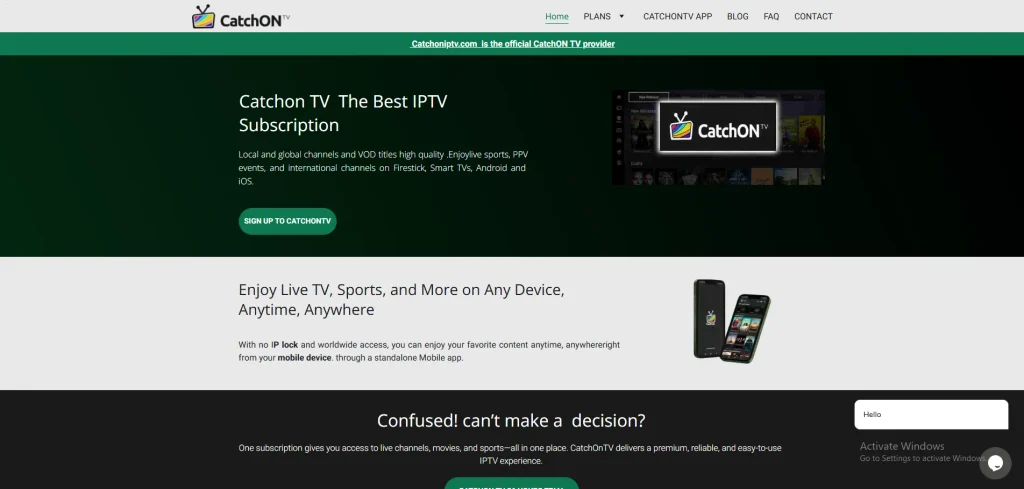
Catch on IPTV is a streaming service built on Internet Protocol Television (IPTV) technology that delivers live TV channels and on-demand content directly through your internet connection. Unlike traditional cable or satellite services, Catch on IPTV operates entirely over IP networks, making it more flexible and cost-effective for modern viewers.
The platform specializes in catch-up TV functionality, a feature that lets you rewind and watch programs that have already aired, typically within a 7-30 day window depending on channel rights and regional licensing agreements. This means you’re never forced to miss your favorite shows due to schedule conflicts or work commitments.
Catch on IPTV aggregates content from multiple broadcast networks and streaming sources, bundling them into a single subscription. Users get access to live channels alongside an on-demand library, all accessible through a single app or interface across multiple devices simultaneously.
How Does Catch Up on IPTV Actually Work?
Catch-up functionality on IPTV services like Catch on IPTV operates through a combination of server infrastructure, licensing agreements, and smart content delivery networks. Here’s the technical foundation behind what makes catch-up TV possible.
When a broadcaster transmits a live program, Catch on IPTV’s servers capture and store that content in their data centers. Rather than forcing viewers to watch in real-time, the platform keeps these recordings available on-demand for a specific window, typically 7 to 30 days depending on individual channel licensing terms.
When you select a show from the catch-up library, the system retrieves the stored video file and streams it to your device using adaptive bitrate streaming technology. This technology automatically adjusts video quality based on your internet speed, ensuring smooth playback whether you’re on a 10 Mbps connection or a 100 Mbps fiber line.
The underlying architecture uses Content Delivery Networks (CDNs) to distribute content from servers closest to your geographic location. This dramatically reduces buffering and ensures fast channel switching, critical features that separate premium IPTV services from mediocre alternatives.
What Are the Key Features of Catch on IPTV?
Catch on IPTV bundles several features designed to appeal to modern cord-cutters and viewers seeking flexibility. Understanding these features helps you determine whether the service aligns with your viewing habits and technical requirements.
Live Channel Access: Catch on IPTV provides access to thousands of live television channels spanning news, sports, entertainment, movies, international content, and niche categories. The exact channel count varies by subscription tier and regional availability, but most plans include 10,000+ channels as a baseline.
Catch-Up TV Window: The standout feature allowing you to access programs that aired within the past 7-30 days. This window varies by channel and region due to licensing restrictions. Popular channels like BBC, Sky, and major broadcasters typically offer 7-14 day windows, while some specialty channels extend to 30 days.
Electronic Program Guide (EPG): A built-in guide showing current programming, upcoming shows, and detailed descriptions. The EPG updates regularly and allows you to schedule recordings or set reminders for future broadcasts, critical functionality for planning your viewing week.
On-Demand Library: Beyond catch-up TV, Catch on IPTV maintains its own VOD library featuring movies, series, documentaries, and exclusive content. This library updates weekly, ensuring fresh entertainment choices alongside live broadcasting.
Multi-Device Streaming: Most Catch on IPTV plans allow simultaneous streaming on 2-4 devices, covering Smart TVs, smartphones, tablets, Fire Sticks, and desktop computers. One subscription covers your entire household entertainment infrastructure.
DVR Functionality: Many plans include cloud-based DVR, allowing you to record live programs and access them later. This adds another layer of flexibility on top of catch-up TV, letting you create a personal library of content.
Is There a Free Trial Available for Catch on IPTV?
Trial availability for Catch on IPTV varies depending on your geographic location and current promotional periods. Most legitimate IPTV services, including premium alternatives like Nixon IPTV, offer some form of trial to let new users evaluate the service before committing financially.
When Catch on IPTV does offer trials, they typically range from 24-48 hours of full access. During this period, you get complete access to live channels, catch-up content, and on-demand libraries. Trials usually require email registration but may or may not require payment method information upfront.
Pro Tip: Before signing up for any IPTV trial, verify the service’s refund policy. Check available free trial options that offer risk-free testing periods. Always check terms carefully to avoid unexpected charges.
If Catch on IPTV’s trial currently isn’t available in your region, consider exploring comparable services. The IPTV market has matured significantly, and multiple competitors offer similar catch-up functionality alongside superior infrastructure and customer support.
Catch on IPTV Reviews: What Do Users Really Think?
User reviews and real-world feedback reveal the practical strengths and limitations of any IPTV service. Catch on IPTV user sentiment across multiple platforms shows a mixed picture worth examining before subscribing.
Positive Feedback: Users consistently praise Catch on IPTV’s catch-up TV feature, noting it solves a genuine problem: missing programs due to life’s unpredictable schedule. The platform’s channel selection and user interface often receive compliments from those seeking a straightforward streaming experience without excessive complexity.
Common Complaints: Recurring issues in user reviews include inconsistent streaming quality during peak hours, occasional channel dropouts, and regional content limitations. Some users report that catch-up availability isn’t guaranteed for all channels, with certain broadcasters restricting historical access.
Technical Performance: Reviews highlight variable performance depending on location and ISP. Users with stable, high-speed connections report excellent performance, while those with bandwidth constraints mention buffering issues. Streaming quality depends partly on your infrastructure rather than solely on the service provider.
Customer Support Feedback: Mixed reviews here; some users praise responsive support agents, while others report slow response times and difficulty resolving technical issues. This inconsistency suggests support quality may vary by region or support channel used.
For a more reliable assessment, compare Catch on IPTV reviews against established alternatives with consistent high reviews across platforms, with particular praise for 24/7 support, uptime commitments, and stable streaming performance.
Catch on TV IPTV Pricing: What Will You Actually Pay?
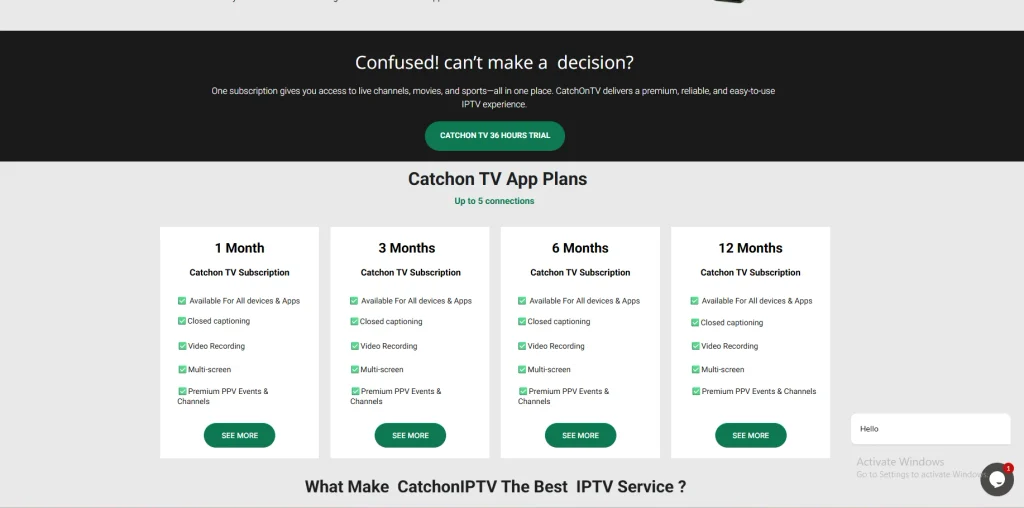
Understanding IPTV pricing requires looking beyond base subscription costs to total value, including what channels you get, device limits, and support quality. The IPTV pricing structure varies by region, but typical tiers range from $8-20 monthly.
Entry-Level Packages typically cost $8-12/month and include 5,000-8,000 channels with standard definition streaming on 1-2 devices. These plans work for casual viewers with single-TV households and basic entertainment needs.
Mid-Tier Packages ($12-15/month) expand channel counts to 10,000+ with HD streaming capability and 2-3 simultaneous device connections. This tier represents the sweet spot for most households balancing cost and functionality.
Premium Plans ($15-20/month) add 4K streaming capability, priority customer support, and extended catch-up windows. These plans appeal to tech-forward households with multiple streaming needs and investment in 4K-capable televisions.
Comparison Context: When evaluating price, factor in total value including channel count, concurrent streams, and support quality rather than fixating on base price alone. Premium options often deliver better long-term value despite higher monthly costs.
Many IPTV services employ annual payment discounts: pay for 12 months upfront and save 20-30% compared to monthly billing. This strategy locks in lower rates but requires higher upfront commitment, so evaluate financial flexibility before choosing annual billing.
How Do You Use Catch Up on IPTV? Step-by-Step Guide
Getting started with Catch on IPTV’s catch-up feature requires understanding both technical setup and interface navigation. The process is straightforward once you understand where to find catch-up content versus live channels.
Step 1: Subscribe and Download the App. Visit catchoniptv.com, select your preferred subscription tier, and complete payment processing. Once approved, you’ll receive login credentials via email. Download the Catch on IPTV app from the Google Play Store (Android), the Apple App Store (iOS), or compatible platforms like Fire Stick and Smart TV app stores.
Step 2: Install and Authenticate. Launch the app, enter your credentials, and allow the application to connect to Catch on IPTV’s servers. Authentication typically completes within seconds. The app may ask for permissions (camera, microphone, storage); grant only those required for streaming functionality.
Step 3: Navigate to the Catch-Up Section. Most IPTV apps organize content into sections: “Live,” “On-Demand,” and “Catch-Up” or “Recent.” Select the Catch-Up section to view programs that aired within your provider’s catch-up window (typically 7-30 days). This differs from the On-Demand library, which contains permanent VOD content.
Step 4: Browse by Channel or Time. Catch-up content is typically organized by channel name, with a timeline showing what aired when. You can scroll through past dates to find specific programs or browse a channel’s entire catch-up catalog to see what’s available for watching.
Step 5: Start Playback and Use Controls. Select your desired program, and playback begins immediately (or buffers briefly depending on your connection). Use standard playback controls: play/pause, fast-forward, rewind, and seek-to-time. Quality typically adjusts automatically to match your bandwidth.
Pro Tip for Setup: If you’re new to IPTV setup generally, check detailed setup guides for device-specific installation instructions. Fundamental setup steps apply across most IPTV platforms and help you understand technical requirements upfront.
What Are Catch on IPTV’s Main Advantages?
Identifying real advantages of any streaming service requires separating marketing claims from practical benefits users actually experience. Catch on IPTV offers several legitimate strengths worth considering.
Flexibility Redefined: The core advantage is schedule independence. Miss your favorite show due to work, family commitments, or simply sleeping through the broadcast? Access it through catch-up within your provider’s content window. This flexibility alone attracts viewers frustrated with rigid cable schedules.
Comprehensive Channel Selection: With thousands of channels spanning global broadcasters, sports networks, news outlets, and entertainment channels, Catch on IPTV serves diverse viewing interests within a single subscription. International viewers particularly appreciate access to hometown broadcasters alongside mainstream entertainment.
Cost Efficiency vs. Cable: At $8-20/month versus $100-150/month for cable subscriptions with similar channel counts, IPTV services like Catch on IPTV deliver obvious financial advantages. No installation fees, no equipment rentals, no long-term contracts, just pure streaming at transparent pricing.
Multi-Device Support: Streaming across your household devices (TV, phone, tablet) without additional subscriptions or hardware represents significant practical value. This flexibility allows family members to watch independently without conflicts.
On-Demand Variety: Beyond catch-up TV, these services maintain growing VOD libraries with movies, series, and exclusive content. The combination of live, catch-up, and on-demand creates a complete entertainment ecosystem.
Technical Accessibility: IPTV services require only an internet connection and a compatible device, dramatically lowering barriers compared to traditional broadcast infrastructure setup.
What Are Catch on IPTV’s Main Disadvantages?
No service achieves perfection, and Catch on IPTV carries several limitations worth understanding before subscribing. Honest assessment demands examining weaknesses alongside strengths.
Licensing Complexity: Content availability varies by region due to licensing agreements, broadcast rights, and regulatory frameworks. A feature available in your region might be restricted elsewhere, and catch-up windows for specific channels depend on complex licensing negotiations between platforms and broadcasters.
Internet Dependency: Unlike cable delivered through dedicated infrastructure, IPTV quality depends entirely on your internet connection. Users with inconsistent, limited-bandwidth, or unreliable ISP connections experience buffering, quality fluctuations, and potential service outages.
Regional Restrictions: Geographic blocking affects both content availability and service access. Some features, channels, or even the entire service might be unavailable depending on your physical location or claimed location via VPN.
Support Inconsistency: While some IPTV services maintain 24/7 dedicated support teams, others operate with limited customer support availability. The quality of IPTV support appears variable based on user reviews, suggesting experience may depend on support channel and regional team.
Channel Authenticity Questions: Some IPTV services operate in legal gray areas regarding broadcast rights and content licensing. Before subscribing, research the provider’s operational legitimacy, licensing agreements, and regional legal standing.
Quality Variability: Streaming quality fluctuates based on server load, your connection, and variable bitrate delivery. Unlike cable’s consistent signal, IPTV quality represents a calculated average rather than guaranteed consistency.
Catch on IPTV vs. Traditional Cable: Head-to-Head Comparison
Evaluating whether Catch on IPTV makes sense for your household requires direct comparison with cable and other streaming alternatives. Here’s how they stack up across key metrics.
| Metric | Catch on IPTV | Traditional Cable | IPTV Advantage |
|---|---|---|---|
| Monthly Cost | $8-20 | $100-150+ | IPTV: 80-90% cheaper |
| Contract Length | None (month-to-month) | 24 months typical | IPTV: Flexibility |
| Channel Count | 10,000+ | 300-500 | IPTV: 20-30x more channels |
| Installation | Download app | Technician visit | IPTV: Immediate access |
| Equipment Fees | None | $10-15/month rental | IPTV: No additional costs |
| Catch-Up Window | 7-30 days | None (live only) | IPTV: Clear advantage |
| On-Demand Library | Yes (growing) | Limited | IPTV: More comprehensive |
| Multi-Device Streaming | 2-4 simultaneous | 1-2 simultaneous | IPTV: Generally better |
| Technical Requirements | 25+ Mbps recommended | Dedicated cable line | Variable |
| Customer Support | Variable quality | 24/7 phone access | Depends on provider |
The comparison clearly favors IPTV for cost, flexibility, and feature richness. However, cable delivers superior reliability in regions with poor internet infrastructure and offers consistent quality regardless of network conditions.
How Does Catch on IPTV Compare to Top Competitors?
The IPTV market includes several established competitors, each with distinct strengths and weaknesses. Understanding these alternatives helps you make informed decisions about which service best suits your needs.
Popular Competitors: Leading IPTV providers offer 15,000+ live channels, 160,000+ movies and series, and multi-device support. Key differentiators include 24/7 expert customer support, uptime guarantees, and money-back guarantees. For reliability-focused consumers, premium services represent the best value alternatives.
IPTV Smarters: A popular third-party app hosting multiple provider streams. While offering flexibility in provider selection, Smarters depends on individual provider quality and support structures, making the experience highly variable.
Stellar IPTV: Known for stable performance and diverse channel selection, though pricing typically ranges $15-25/month, higher than competitors offering similar features.
Kodi + Custom Builds: Tech-savvy users often deploy Kodi media center with custom add-ons, offering maximum customization but requiring significant technical knowledge and ongoing maintenance.
YouTube TV / Sling TV: American-focused alternatives emphasizing legal streaming of licensed content. Lower channel counts (100-200) and higher costs ($55-70/month) make them less attractive to international viewers or those seeking IPTV’s comprehensive library.
Catch on IPTV occupies the middle ground, more affordable and feature-rich than traditional cable or YouTube TV, but potentially less stable than premium IPTV services offering established infrastructure.
Is Catch on IPTV Legal? Understanding the Gray Zone
IPTV legality represents a complex question requiring geographic and contextual understanding. The technology itself is entirely legal; the legality debate centers on content licensing and broadcast rights.
Technical Legality: IPTV technology for delivering internet-based video is completely legal. Broadcasters, streaming platforms, and educational institutions worldwide use IPTV infrastructure legitimately. The legality question focuses on specific service operations, not the underlying technology.
Licensing and Content Rights: Services like Catch on IPTV operate legally only when holding proper licensing agreements with content creators, broadcasters, and rights holders. Many IPTV services operate in legal gray areas—obtaining content without explicit broadcast rights for all channels offered.
Geographic Variation: Legality varies significantly by region. What’s legal in one country might infringe copyright elsewhere. Regulatory frameworks in the UK, US, Canada, Australia, and EU differ substantially regarding IPTV provider obligations.
Research Your Provider: Before subscribing, research whether Catch on IPTV holds documented licensing agreements with major broadcasters in your region. Legitimate services proudly display their licensing credentials; ambiguity suggests potential legal concerns.
Safer Alternatives: If legal certainty matters for your household, premium services operate with established licensing agreements and transparent business practices. The slightly higher cost provides legal clarity and protection against future service disruptions.
Catch on IPTV Streaming Quality
Streaming quality on IPTV services depends on multiple factors beyond the provider’s control. Understanding these factors helps you set realistic expectations and troubleshoot issues when quality fluctuates.
Resolution Options: Catch on IPTV supports standard definition (SD), high definition (HD), and 4K Ultra High Definition (UHD) depending on channel broadcast quality and your subscription tier. Not all channels broadcast in 4K, availability depends on the original broadcaster’s capabilities.
Adaptive Bitrate Technology: Rather than maintaining a fixed bitrate regardless of connection quality, modern IPTV services use adaptive bitrate encoding. This automatically reduces bitrate during congestion and increases it when bandwidth permits, balancing quality and reliability.
Minimum Bandwidth Requirements:
- SD Content: 5-8 Mbps
- HD Content: 15-25 Mbps
- 4K Content: 50+ Mbps (depending on encoding efficiency)
Real-world performance also depends on ISP consistency; providers with variable throughput throughout the day experience quality fluctuations alongside normal usage patterns.
Peak Hour Performance: Streaming quality typically degrades during peak viewing hours (evenings, weekends) when network congestion increases. Premium services maintain server infrastructure scaled for peak loads, mitigating this issue through investment in capacity.
Channel Quality Variation: Not all channels broadcast at identical quality. Premium sports and entertainment channels typically offer HD/4K, while niche or international channels often stream in standard definition. The highest-quality channels typically cluster in entertainment and sports categories.
Connection Stability Matters: Beyond bandwidth, connection stability affects quality more than most users realize. Wireless connections introduce latency and packet loss, affecting consistency; wired Ethernet connections deliver superior reliability.
Setting Up Catch on IPTV on Popular Devices
Device compatibility and setup procedures vary significantly across platforms. Here’s device-specific guidance for the most popular streaming platforms.
Smart TVs (Samsung, LG, Sony): Most modern Smart TVs support IPTV app installation directly through built-in app stores. Search for Catch on IPTV in your TV’s app store, install, authenticate with your credentials, and begin streaming. For older TV models lacking app store access, consider external devices (Roku, Fire Stick, Android TV boxes).
Amazon Fire Stick: The Fire Stick ecosystem makes IPTV installation straightforward. Navigate to the Amazon Appstore, search “Catch on IPTV,” install the app, and authenticate. Fire Stick performance is generally excellent for IPTV applications, offering fast load times and stable streaming.
Android Devices (Phones & Tablets): Download the Catch on IPTV app from the Google Play Store, install, and authenticate. Ensure your device runs Android 5.0 or newer. For devices not using the Google Play Store, download APK files directly from Catch on IPTV’s website, though this introduces security considerations worth evaluating carefully.
iOS Devices (iPhone & iPad): If available in your region’s App Store, download the official Catch on IPTV app. iOS restrictions on sideloading mean unofficial apps carry security risks; stick with official App Store versions when available.
Windows & Mac Computers: While Catch on IPTV may offer desktop applications for some regions, compatibility and feature support often lag behind mobile apps. Alternatively, web-based access through your browser provides IPTV streaming on computer platforms.
Android TV Boxes: Third-party Android TV boxes (not official Google TV devices) often support sideloading IPTV applications. Installation procedures vary by manufacturer, but generally involve enabling installation from unknown sources, downloading APKs, and authenticating.
Troubleshooting Setup Issues: If installation fails, confirm your device meets minimum requirements (adequate storage, current OS version, sufficient RAM). For persistent problems, check device-specific setup guides that cover common installation issues across platforms; fundamental guidance applies broadly across IPTV services.
Catch on IPTV Customer Support: What to Expect
Customer support quality represents an often-overlooked factor affecting user satisfaction and problem resolution speed. Catch on IPTV’s support infrastructure shows inconsistent performance based on available user feedback.
Available Support Channels: Most IPTV services offer email support and online ticketing systems, with premium services adding live chat and phone support. Catch on IPTV reportedly offers email and live chat, adequate for many issues but potentially frustrating during time-sensitive problems.
Response Times: User reviews report highly variable response times ranging from under 1 hour to multiple days depending on support volume and regional team availability. This inconsistency suggests support quality may depend on support channel and specific regional team assignment.
Technical Expertise: Support quality depends on staff technical knowledge. Better-resourced services maintain better-trained teams capable of quickly diagnosing and resolving complex technical issues. Support tiers often reflect this—some services charge premium fees for advanced technical support.
Knowledge Base Resources: Comprehensive documentation, FAQ sections, and troubleshooting guides reduce support burden and help users resolve issues independently. Limited documentation forces users toward support channels, increasing support burden and response time delays.
Comparison: Premium services advertise 24/7 expert support with typically quick resolution times. Consistent 24/7 availability represents a significant advantage over services operating limited support hours. Additionally, comprehensive documentation enables independent problem-solving.
Catch on IPTV Refund Policy and Money-Back Guarantee
Refund policies reveal provider confidence and consumer protection commitment. Catch on IPTV’s refund policy varies by region and payment method, so reading terms carefully before subscription is essential.
Typical IPTV Refund Structures: Industry-standard practices offer 7-30 day money-back guarantees, allowing subscription cancellation with full refunds if service doesn’t meet expectations. Legitimate providers prominently display these policies; their absence suggests possible concerns.
Catch on IPTV’s Specific Policy: Exact refund terms require checking their website or contacting support, as policy details change periodically and vary by region. However, most established IPTV services offer at least 7-day guarantees.
Refund Processing: Once approved, refunds typically process within 5-10 business days to your original payment method. Delays sometimes occur with international transfers or if payment was made through third-party systems rather than direct provider channels.
Cancellation Methods: Request refunds through official channels only, customer support email or account dashboard. Avoid third-party payment processors or dispute claims unless direct cancellation fails, as these complicate refund tracking.
Best Practice: Before subscription, document the exact refund policy in writing (screenshot confirmation pages). If issues arise post-subscription, reference documented policies when requesting refunds. This protects you against policy change disputes.
Premium Comparison: Services offering extended money-back guarantees provide generous consumer protection compared to the industry average, suggesting strong service confidence and commitment to customer satisfaction.
Conclusion: Should You Subscribe to Catch on IPTV?
Deciding whether Catch on IPTV merits your subscription depends on your specific viewing habits, internet infrastructure, and regional content needs. This detailed review provides a framework for that decision.
Best For: Users prioritizing cost savings over absolute reliability, households with strong internet connections, viewers seeking international content access, and those comfortable with variable quality during peak hours.
Not Ideal For: Users requiring guaranteed reliability, those with limited internet bandwidth, individuals in regions with questionable IPTV service legality, and viewers seeking 24/7 dedicated technical support.
The Honest Assessment: Catch on IPTV represents a competent mid-tier IPTV option with catch-up TV flexibility as its core strength. However, inconsistent user reviews regarding streaming quality, variable support responsiveness, and regional licensing limitations suggest it occupies middle ground rather than a leading position.
For Superior Reliability: If consistent streaming quality, 24/7 expert support, and established licensing practices matter more than absolute lowest cost, premium alternatives deliver better long-term value. These services reflect a stronger commitment to customer satisfaction that extends beyond typical IPTV market standards.
Next Steps: Before deciding, take advantage of any available trials or guarantees. Most legitimate IPTV services offer some form of risk-free testing period. Use this window to evaluate actual performance on your connection with your devices before financial commitment.